
An auto repair shop where every car is visible on a screen — from booking to handover.
Before: bookings in a notebook and over the phone, estimates written by hand. We made the mark, the site with online booking, the system the whole team works in, and the path that carries a clip filmed in the shop to the social channels on its own, already edited.
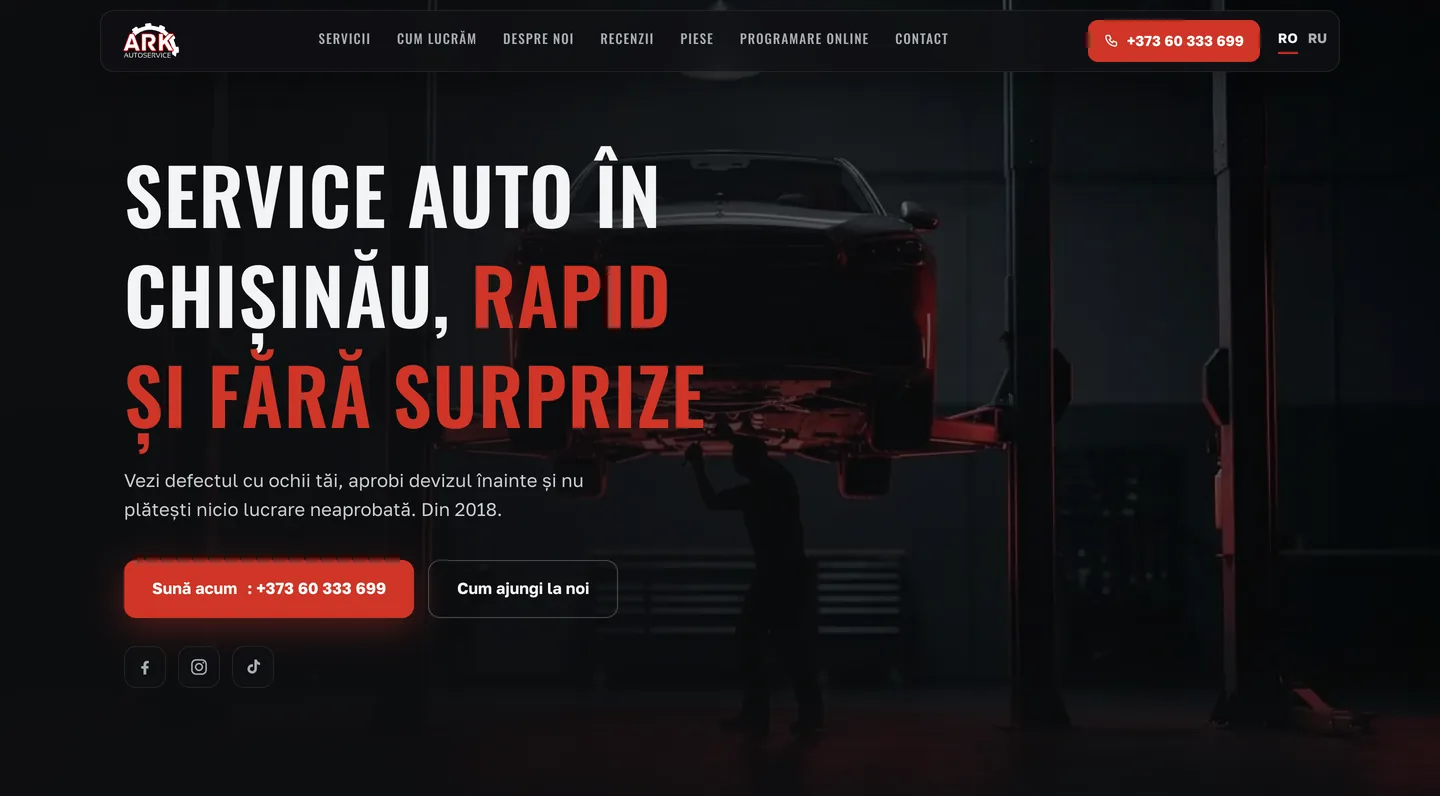
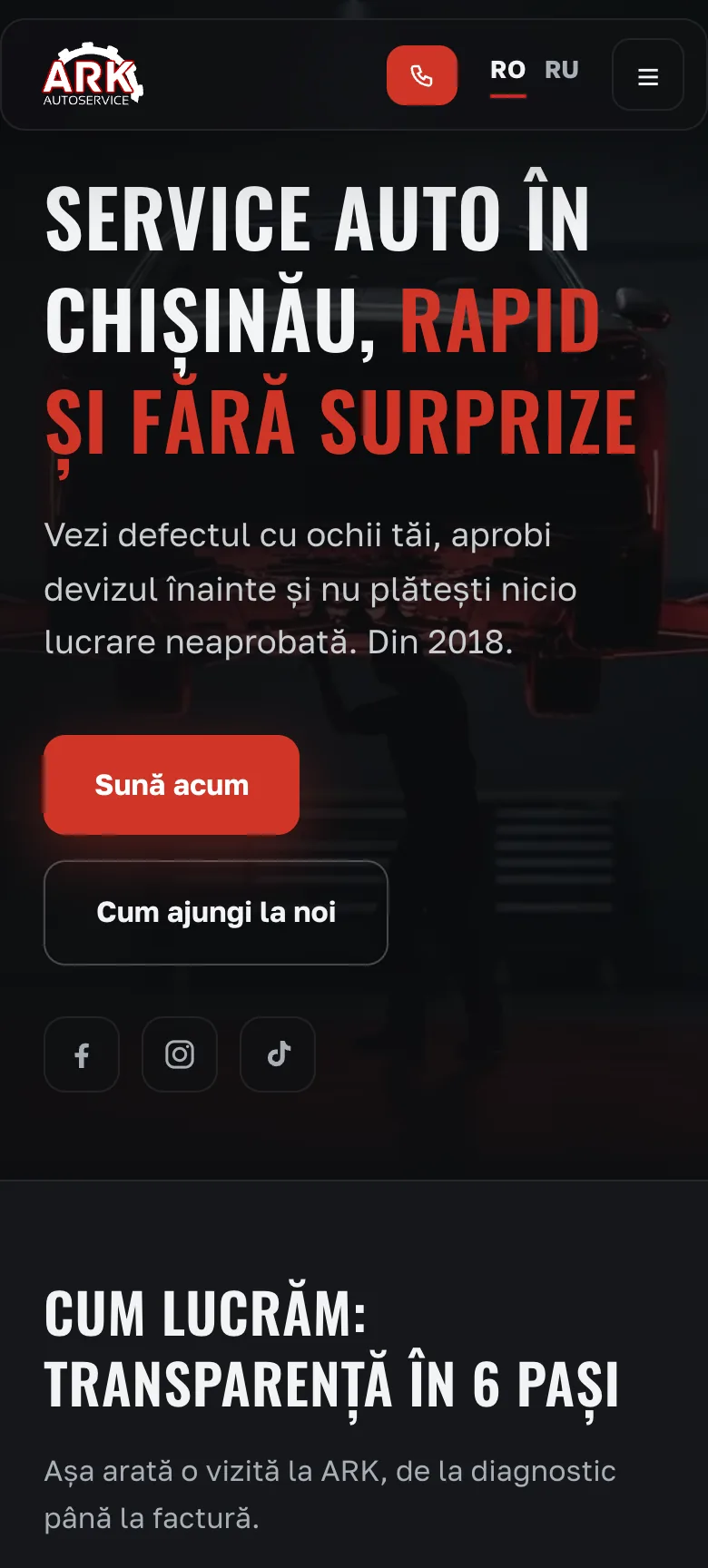
The mark, the site, the system and everything that goes out on its own
- 01
The mark
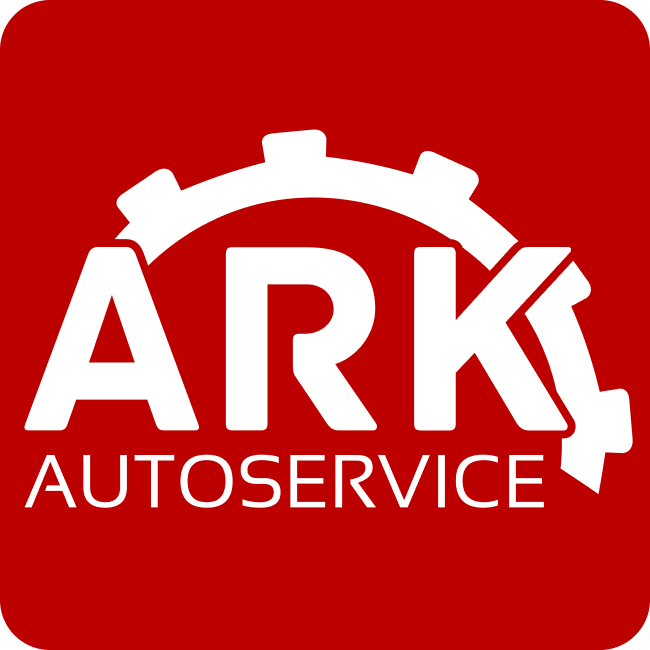
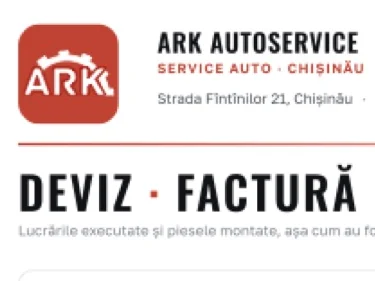
The cogwheel mark and every variant of it: for the site, the social accounts, the clips and the estimate’s letterhead.
- 02
The arkservice.md site
In Romanian and Russian, replacing the old WordPress. A single page, built to answer one question: can I trust these people?
- 03
Online booking
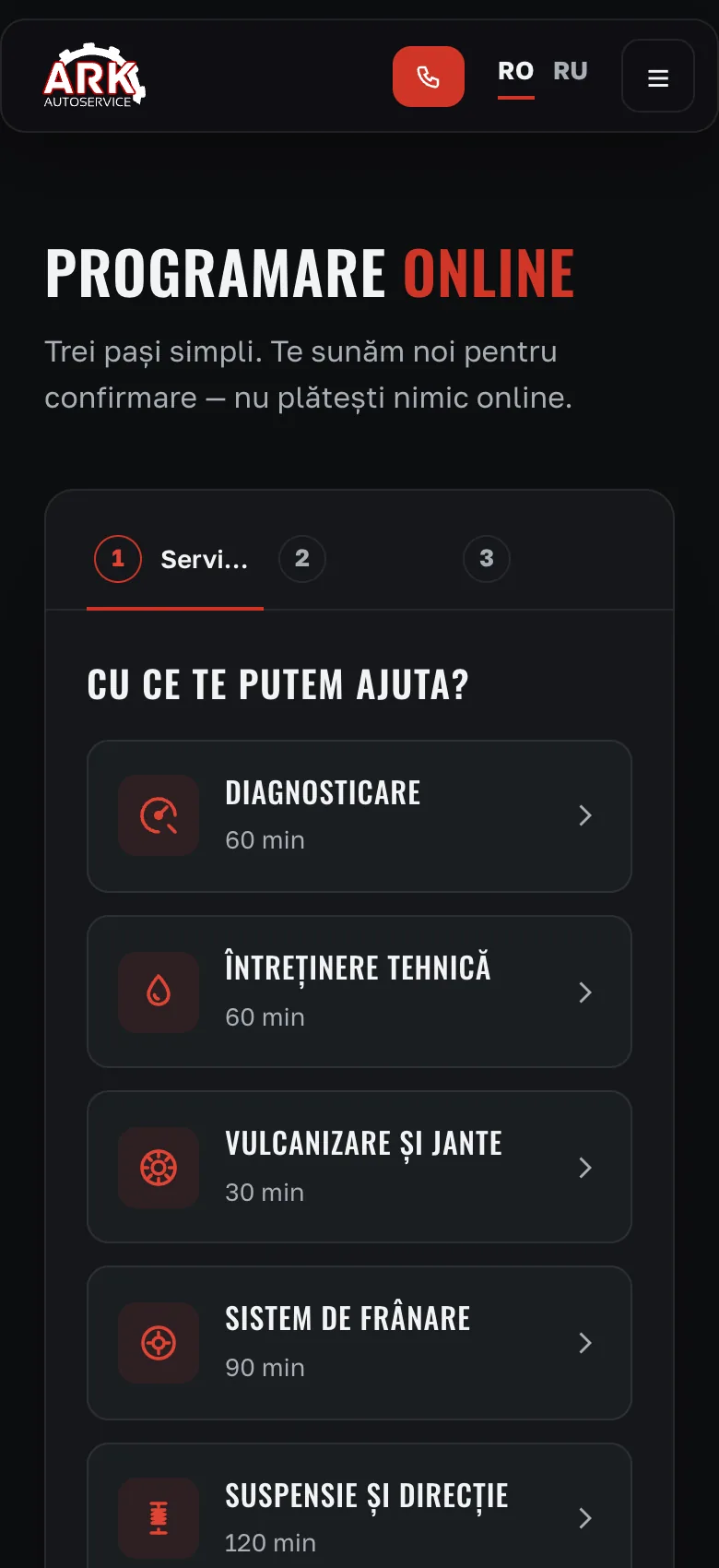
Three steps, with the free slots taken straight from the shop's calendar. The request lands at reception, ready to confirm.
- 04
The shop's system
Work orders, cars, customers and lifts in one place. Reception, the mechanics and the manager each have their own screen.
- 05
The documents and the manual
The estimate and the intake form come out of the system as PDFs. The team got a manual with screenshots of their own system.
- 06
Social accounts and clips
The Instagram, Facebook and TikTok accounts, created and wired to the site. A clip filmed in the shop edits itself and, once approved, appears on all three.
A mark that reads from the street and from a phone
We made the mark and every variant it needed: for the site, the social accounts, the clips and the documents.
The cogwheel does the explaining
The name says who, the mark says what: a repair shop. It reads the same on the sign, on the intake form and in a 40-pixel circle.
The same mark everywhere
Site, system, estimate, social, clips: someone who saw a clip recognises the form they sign at reception.
The page that answers “can I trust them?”
One landing page, in two languages, written around the question every driver asks themselves before picking up the phone.
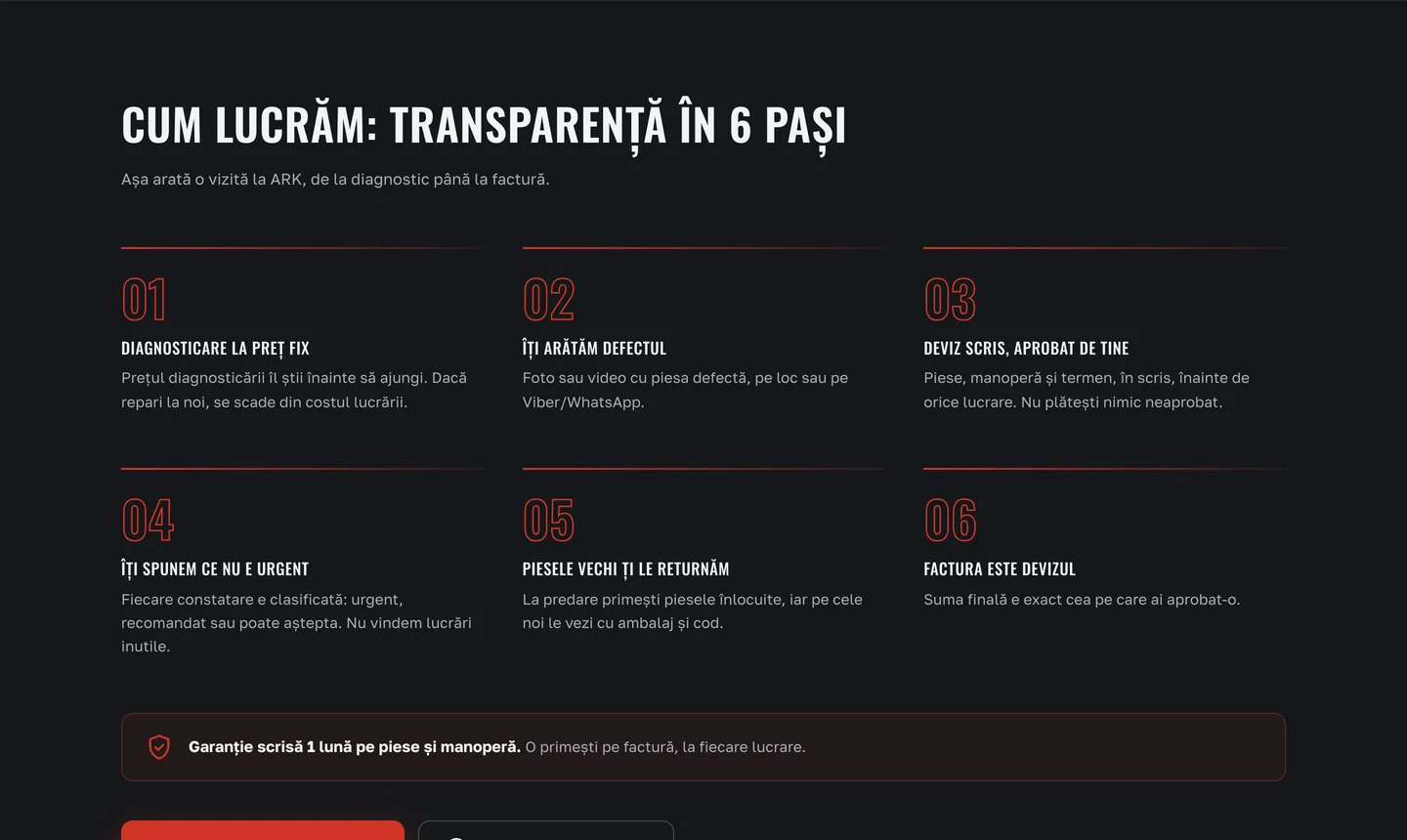
How we work, in six steps
The barrier here is not price, it is distrust. The page shows what happens to the car, step by step: fixed-price diagnosis, the fault shown to you, an estimate approved before any work.
Booking sees the real calendar
The free slots come from the shop's own system, not from a hand-written list. Nobody has to call to find out when there is room, and the request reaches reception ready to confirm.
Romanian and Russian from day one
The shop's customers speak both. This is not a translation bolted on later: both versions shipped together, each with its own address.
From the manager's phone to the social channels, with no hand editing
A repair shop has no time for video editing. So filming stayed the only part a human does.
The edit happens on its own
Silences are cut, the audio is levelled, speech turns into captions. A few minutes per clip, and nobody opens an editing program.
Nothing goes out without a human
The manager sees the finished clip and taps one button. Only then does it publish, with the description each channel needs.
The same clip looks the same everywhere
On Instagram the clips came out visibly worse than on Facebook, from the same file. It was an export setting; we found it and fixed it.
One car's journey, from the phone call to the handover

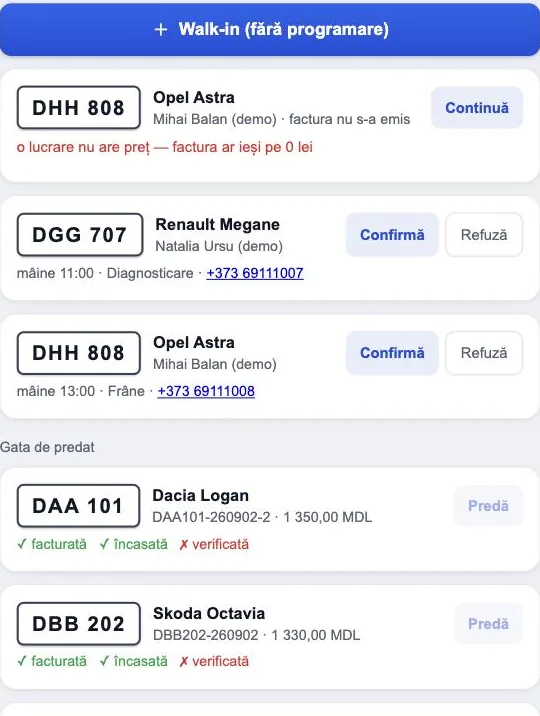
The intake form is never issued blank
It used to be generated automatically when the car arrived, and the customer signed an empty sheet. Now reception fills in what the customer brought in first, and only then presses the button.
An issued invoice is never rewritten
It is reversed, with the reason written down, and gets a different number. The old document stays in the file, so it is clear what changed and why.
Everyone sees only what they need
The mechanic has no business with the money: “To collect” is reception's and the manager's menu. Their boards open on a phone, with a PIN.
The system sits on the shop's own server
It is built on top of Twenty, an open-source CRM: the data is theirs. The backup is pulled off the server daily, not pushed from it — a compromised server cannot delete its own copies.
In your business, who knows right now where each job is?
If the answer is “whoever took it in” or “it is written in the notebook”, the free audit looks at where your customers arrive today and what is still held in someone's memory.
- Client
- ARK Autoservice
- Period
- July–September 2026
- Modules
- Branding, Websites & landing pages, Automation & CRM
- Built with
- Twenty (open-source CRM, on the client's server), TypeScript, n8n, ffmpeg, Telegram
- Site
- arkservice.md